글이 없습니다.
글이 없습니다.

Dong Hoon Shn MD, PhD

Professor, Dept of Anatomy and Cell Biology/Institute of Forensic and Anthropological Science, Seoul National University College of Medicine, Seoul, South Korea

Current Project

Current Project
In history, the human disease is not just a subject of medical research, but is also affected by environment and socio-economic conditions. For the past decades, I have conducted scientific research on the history of diseases in East Asia using medical research techniques. My study is now extending to the next horizon, by integrating archaeological, anthropological, and medical reports on people's life and disease in history. To this end, we will systematically review surviving historical literature from the Joseon Dynasty and actively integrate it into the interpretation of archaeological and anthropological findings. This work is also expected to provide valuable guidance for related researchers by suggesting productive directions for future anthropological research on the Joseon period.

Current Project

Current Project
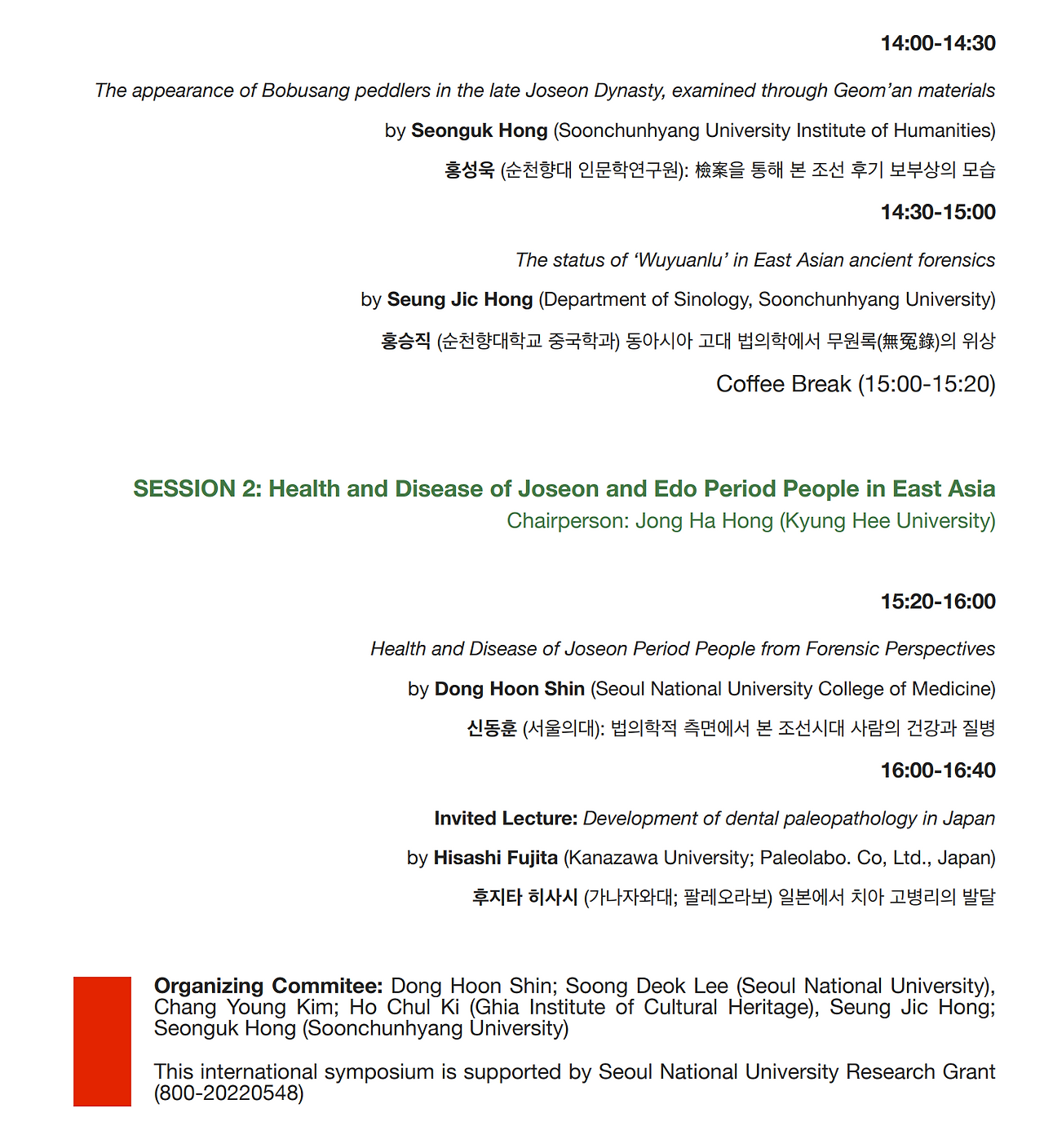
Even before the 20th century, the heritage of forensic works and scientific autopsy based on rationalism created, developed, and reached a considerable level in East Asia. Many reports on murders before the 20th century remain in the royal library of the Joseon Dynasty in South Korea, but the research from a modern forensic perspective has been rarely performed on them so far.

Current Project

Current Project
Korea and Japan have historically developed through long-standing and extensive mutual exchange and influence. Based on findings accumulated by scholars in both countries to date, it is evident that key developments—such as the adoption of agriculture, the spread of Bronze Age culture, and the formation of early states—must be understood from a broader, macro-scale perspective involving population movements and the transmission of domestic animals across East Asia. Archaeological evidence clearly indicates that populations, livestock, and elements of ancient culture originating from major centers of ancient civilization—such as the Yellow River and Liao River regions—moved through the Korean Peninsula and eventually reached the Japanese archipelago. ● Despite this growing body of evidence, many aspects of this process remain insufficiently understood. One major reason is the continued separation between the humanities and the natural sciences: archaeology and natural science research often proceed in parallel rather than in close dialogue. Even exchanges among closely related fields—such as anthropology, archaeology, and zooarchaeology—have been limited. In addition, long-standing historical and ethnic sentiments between Korea and Japan have at times hindered fully objective interpretation. As a result, when compared with well-studied cases such as the migration of early agriculturalists in ancient Europe, population dispersals across the Pacific Islands, or human migrations in the New World, the East Asian case remains far less clearly elucidated. ● Above all, ancient cultural and population flows among Korea, China, and Japan have not yet been sufficiently examined from a global historical perspective through systematic comparison with similar processes in other regions. There remains substantial room for further research to situate East Asian developments more clearly within the broader framework of world history. In particular, population movements, the spread of agriculture, and cultural transmission in ancient East Asia should move beyond the traditional nation-centered framework—one that views these processes solely as transfers between Korea, China, and Japan—and instead be reinterpreted within a more comprehensive, transregional, and non-nationalistic perspective that emphasizes the mobility of people, animals, and culture across East Asia as a whole.

Current Project

Current Project
Over the past 25 years, I have pursued mummy research as part of my work in medical science. The results of these studies have been disseminated through numerous academic papers and books and shared widely with the scholarly community. Now, as the final stage of this long-term scientific endeavor, a comprehensive volume on mummies from the Joseon Dynasty is approaching publication. With the completion of this work, it may be said that my primary research on Korean mummies has reached its conclusion. Nevertheless, as for the mummies of East Asia, many questions remain unresolved, particularly regarding the mechanisms of mummy formation and the medical information preserved within these remains. Much is still unknown about how those mummies were historically formed, how they have been preserved over time, and how they were perceived and treated by contemporary societies. These cultural and historical dimensions remain insufficiently explored for them, the mummies from Korea, China, Japan, and East Siberia, in the academic literature. Accordingly, my future work aims to examine the origins, characteristics, and cultural status of mummies across East Asia from both historical and textual perspectives. By critically reviewing existing historical scholarship and focusing on surviving documentary sources, alongside information we have directly investigated, I seek to present new insights to the academic community. Through this approach, I hope to broaden the understanding of East Asian mummification beyond biomedical analysis and situate it more firmly within its historical and cultural contexts.

Earning a Master's Degree in Japanese Language and Culture (2026)

Earning a Master's Degree in Japanese Language and Culture (2026)

Mummy Congress in Cusco

Mummy Congress in Cusco
Keynote Lecture

With My Colleagues in SNU (2024/3/26)

With My Colleagues in SNU (2024/3/26)

季刊考古学・別冊44 (2023)

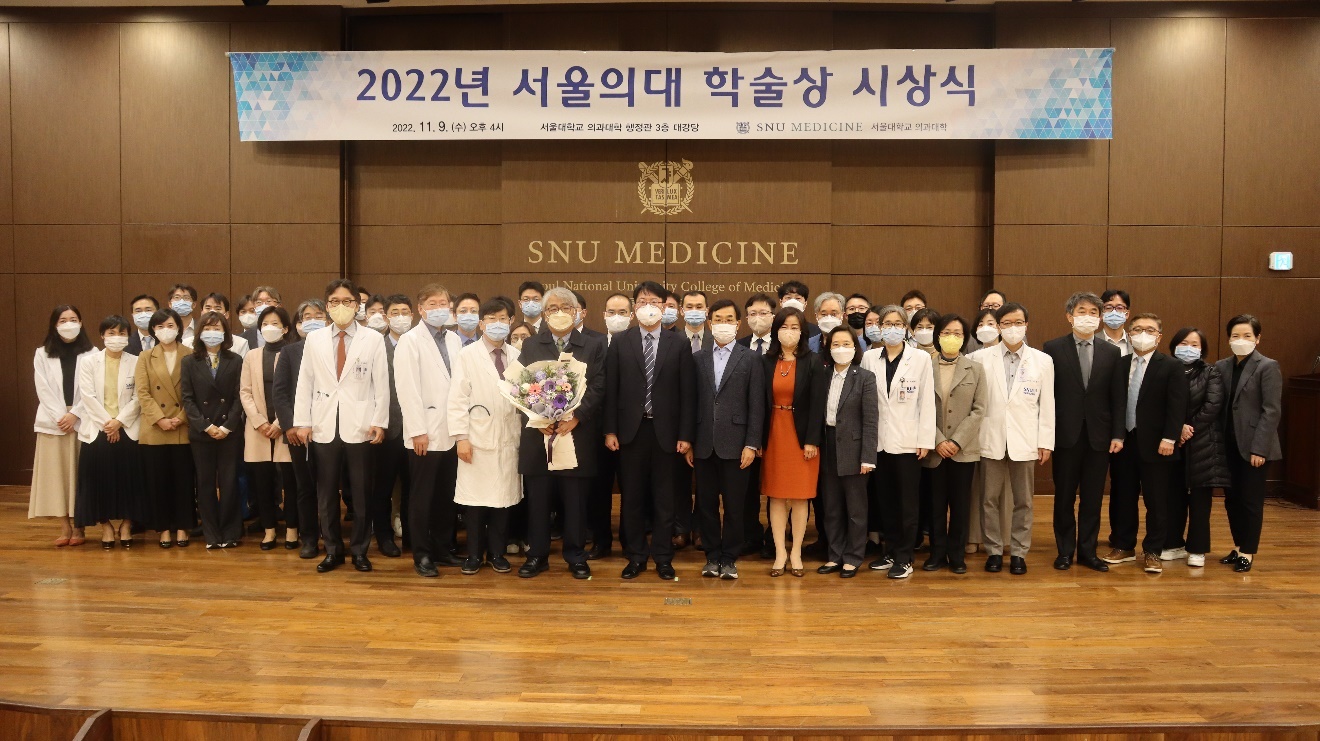
Lifetime Achievement Award in Seoul National University College of Medicine (2022)

With Dr. Jane Buikstra and My Colleagues (2022)


Earning a Master's Degree in Chinese Literature (2022)

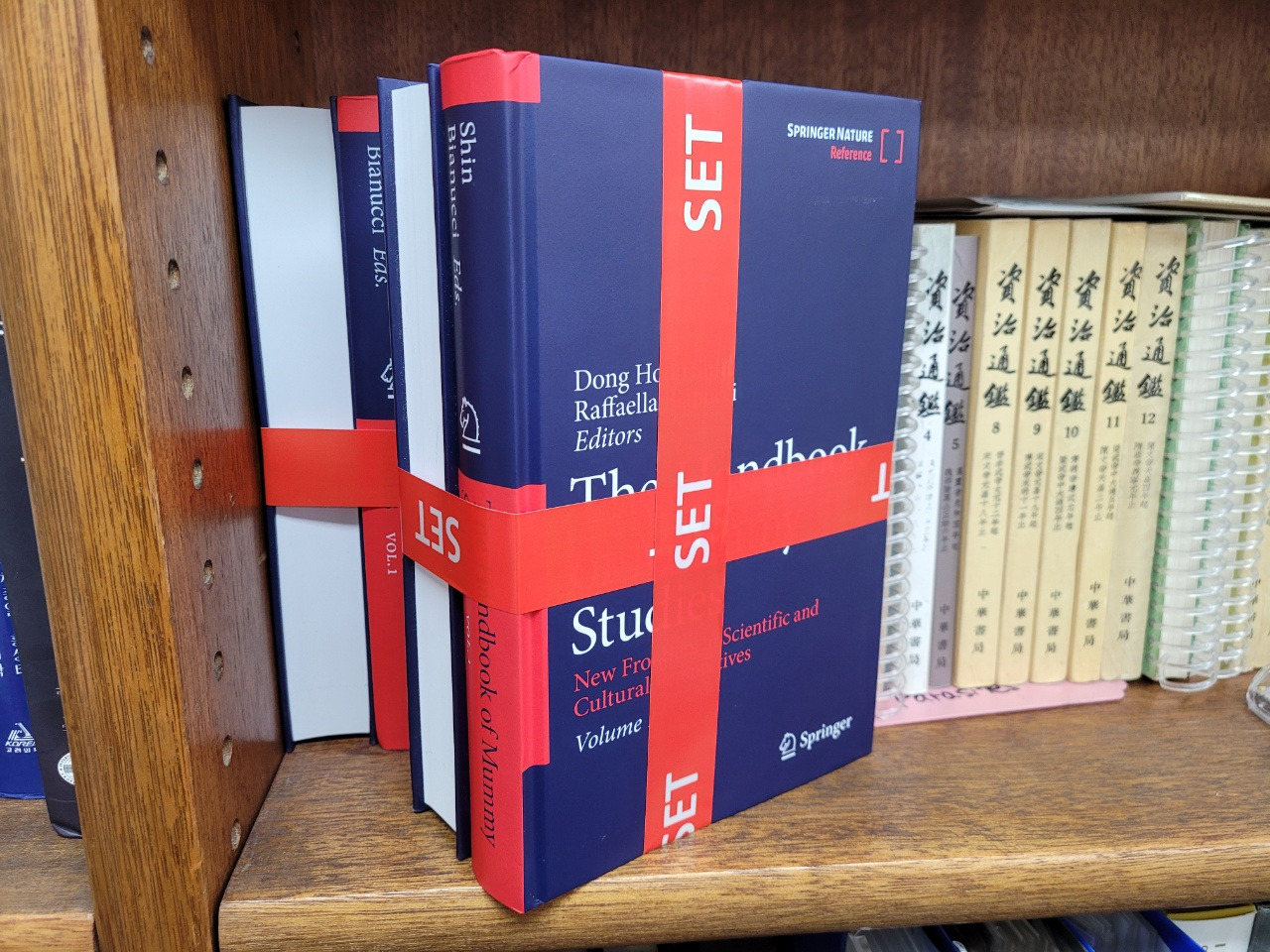
Handbook of Mummy Studies (2021) by Springer

Arctic Region Graves in Siberia (2019)

Arctic Region Graves in Siberia (2019)

Ancient Indus Valley Civilization Cemetery Unearthed in India

Ancient Indus Valley Civilization Cemetery Unearthed in India
National Geographic News (2018)

As a co-host of Archaeoparasitology Workshop

As a co-host of Archaeoparasitology Workshop
North America PPA Meeting (2018)

Research Project in India (2011-2017)

Research Project in India (2011-2017)

Rakhigarhi Excavation (2016)

Rakhigarhi Excavation (2016)
for research of Indus Valley Civilization

National Geographic Explorer (2016~)

Field Works in INDIA

Field Works in INDIA
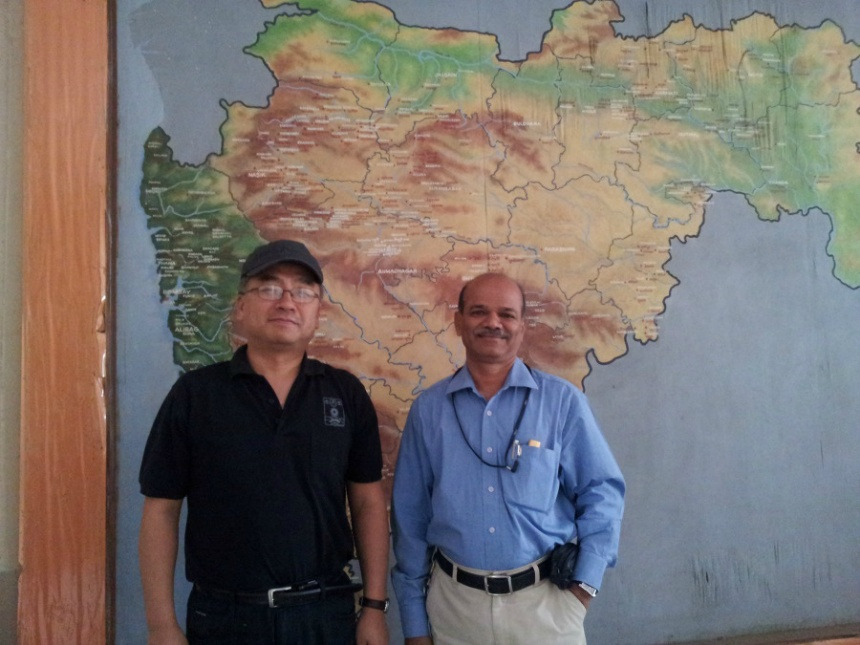
with my colleague Dr. Shinde of India

Earning a Master's Degree in Statistics and Bioinformatics (2015)

Kavli Frontiers of Science: Invited Speaker (2015)

Speaker of Kavli Frontiers of Science (2015)

Speaker of Kavli Frontiers of Science (2015)
"Molecular Paleontology / Paleogenomics"

Teacher of the Year: Seoul National University College of Medicine (2013)

Teacher of the Year: Seoul National University College of Medicine (2013)

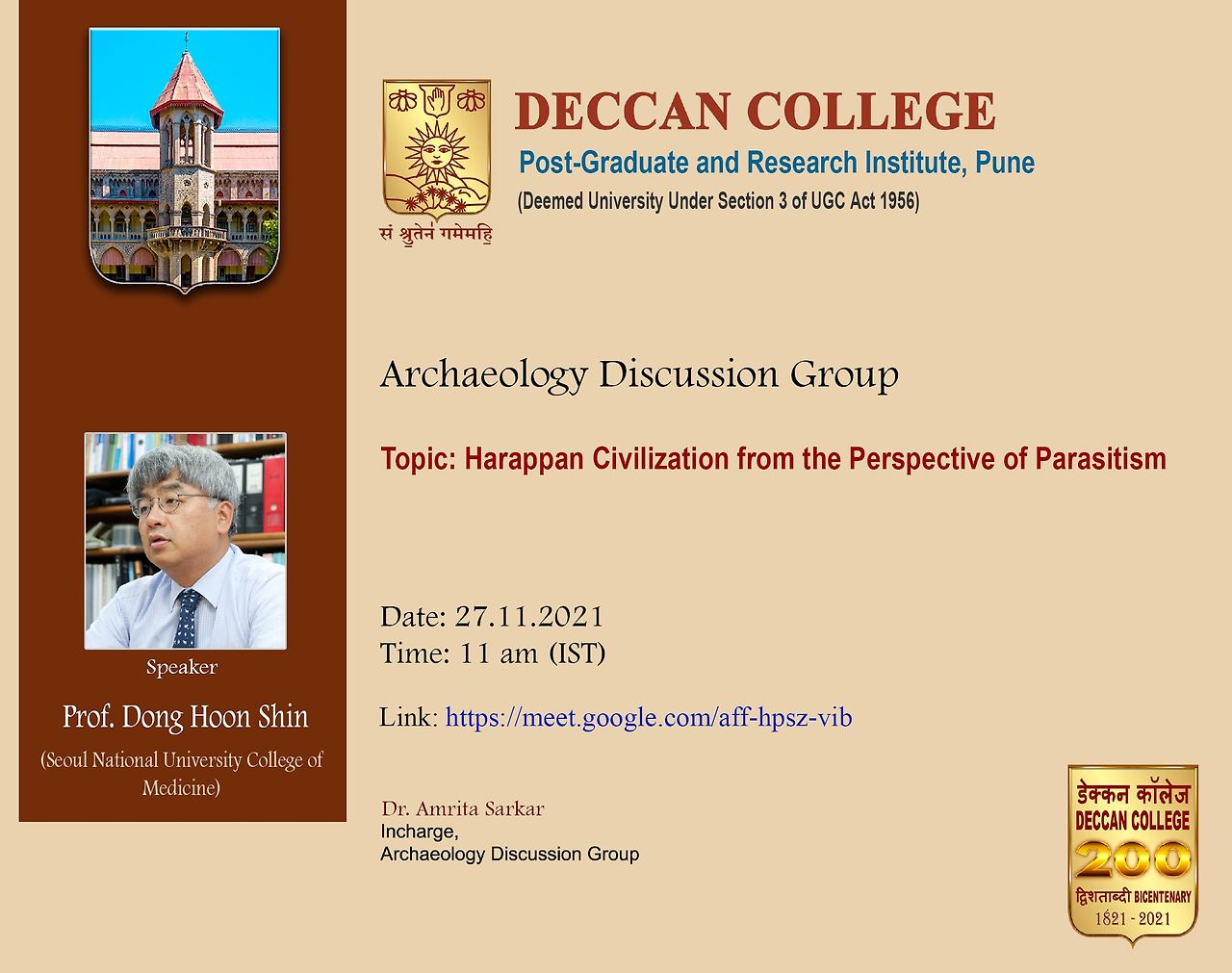
Waiting for My Turn: Lecture in Deccan College (2013)

Waiting for My Turn: Lecture in Deccan College (2013)

Academic Lecture in India (2011)

Academic Lecture in India (2011)

Mummy Congress in Bolzano (2011)

Mummy Congress in Bolzano (2011)

Korean Mummy in National Geographic Kids (2010)

Korean Mummy in National Geographic Kids (2010)

Korean Mummy Article in Archaeology Magazine (2010)

Korean Mummy Article in Archaeology Magazine (2010)

Korean Mummy Article in Antiquity (2009)

Korean Mummy Article in Antiquity (2009)

Korean Mummy in National Geographic Magazine

Korean Mummy in National Geographic Magazine
Locks of Love (2007)

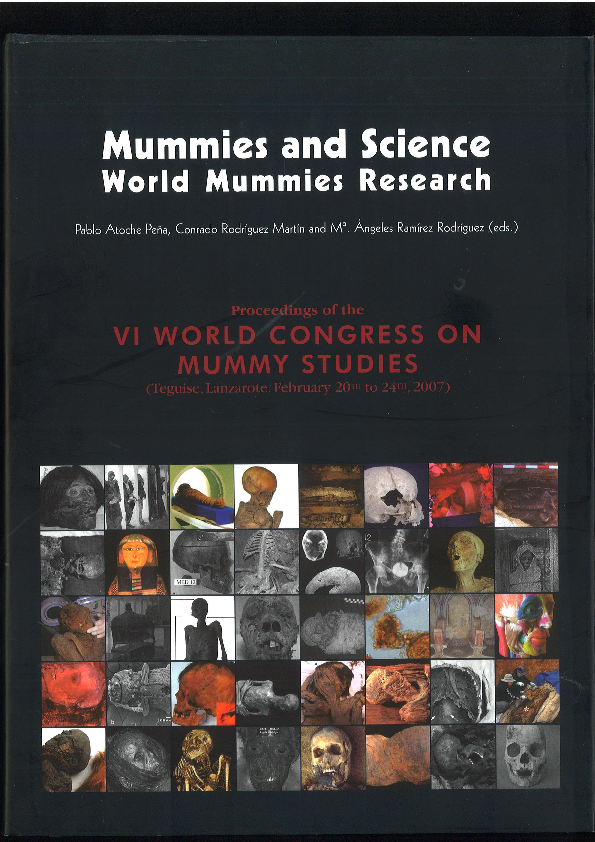
Mummy Congress in Canary Island (2007)

Mummy Congress in Canary Island (2007)

Investigation of Bones at Archaeological Sites (2006)

Investigation of Bones at Archaeological Sites (2006)

First Paper of Korean Mummy Published (2003)

First Paper of Korean Mummy Published (2003)
Ann Anat. 2003 Jul;185(4):377-82.

The World Cup in Korea-Japan

The World Cup in Korea-Japan

Earning a PhD Degree in Anatomy (2000)

Earning a PhD Degree in Anatomy (2000)
Seoul National University

Dankook University (1999-2002)

Dankook University (1999-2002)
Instructor & Assistant Professor

My First Paper (1996)

My First Paper (1996)
Arch Histol Cytol. 1996 Oct;59(4):369-73.

Physician (MD) in Youngwol County (-1996)

Physician (MD) in Youngwol County (-1996)

Graduation (1992): Doctor of Medicine (Haksa Degree)

Graduation (1992): Doctor of Medicine (Haksa Degree)
Seoul National University College of Medicine

Born (1966)

Born (1966)
in South Korea